This project has won a Gold Addy Award and Special Recognition Award from the American Advertising Federation!
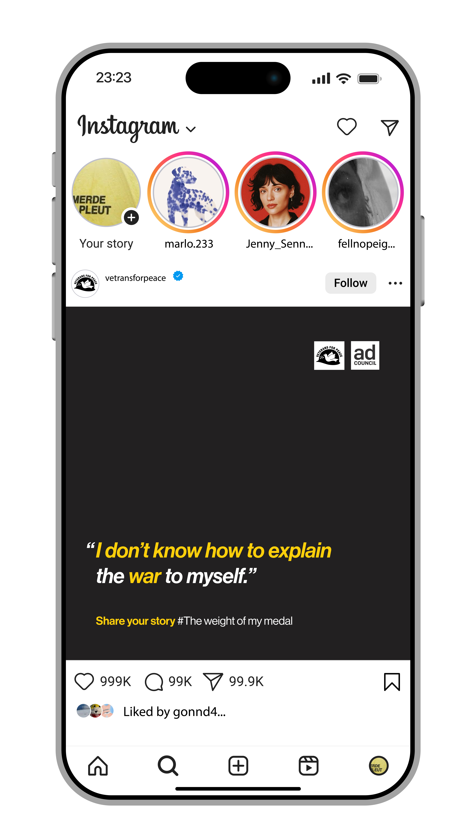
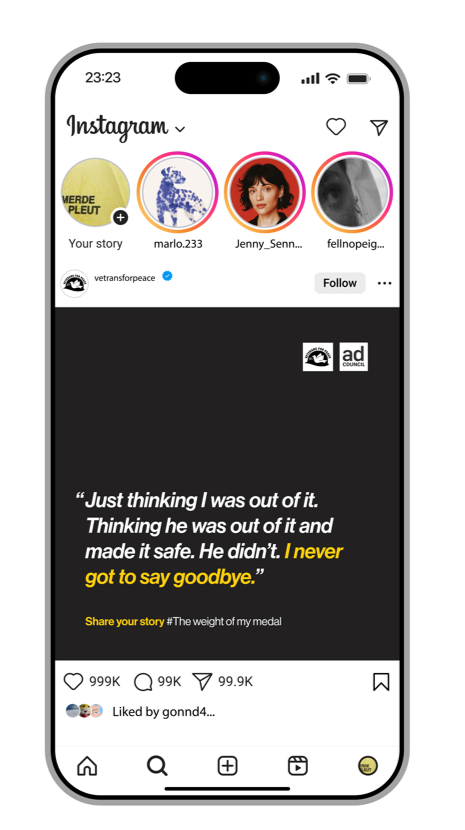
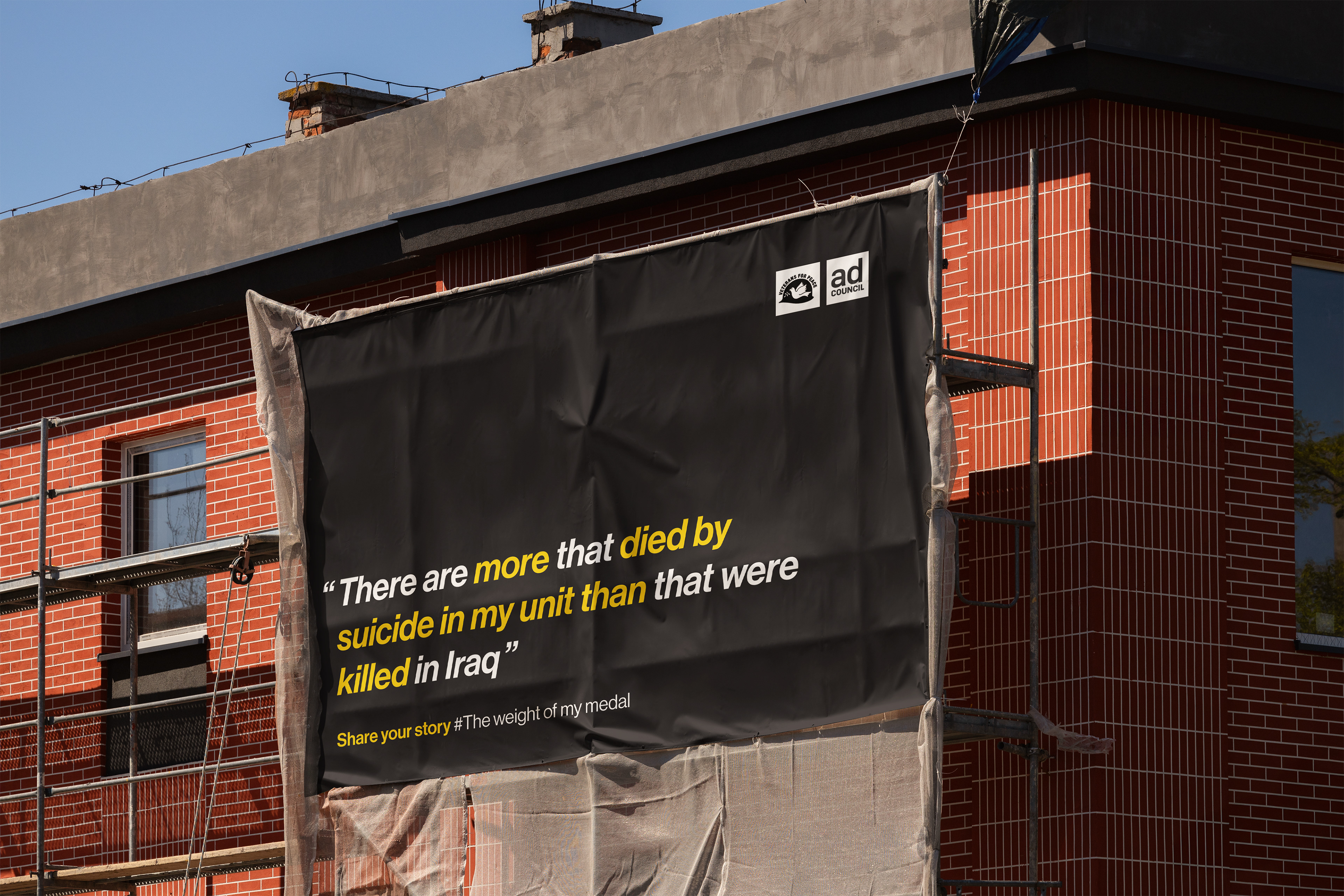
Objective
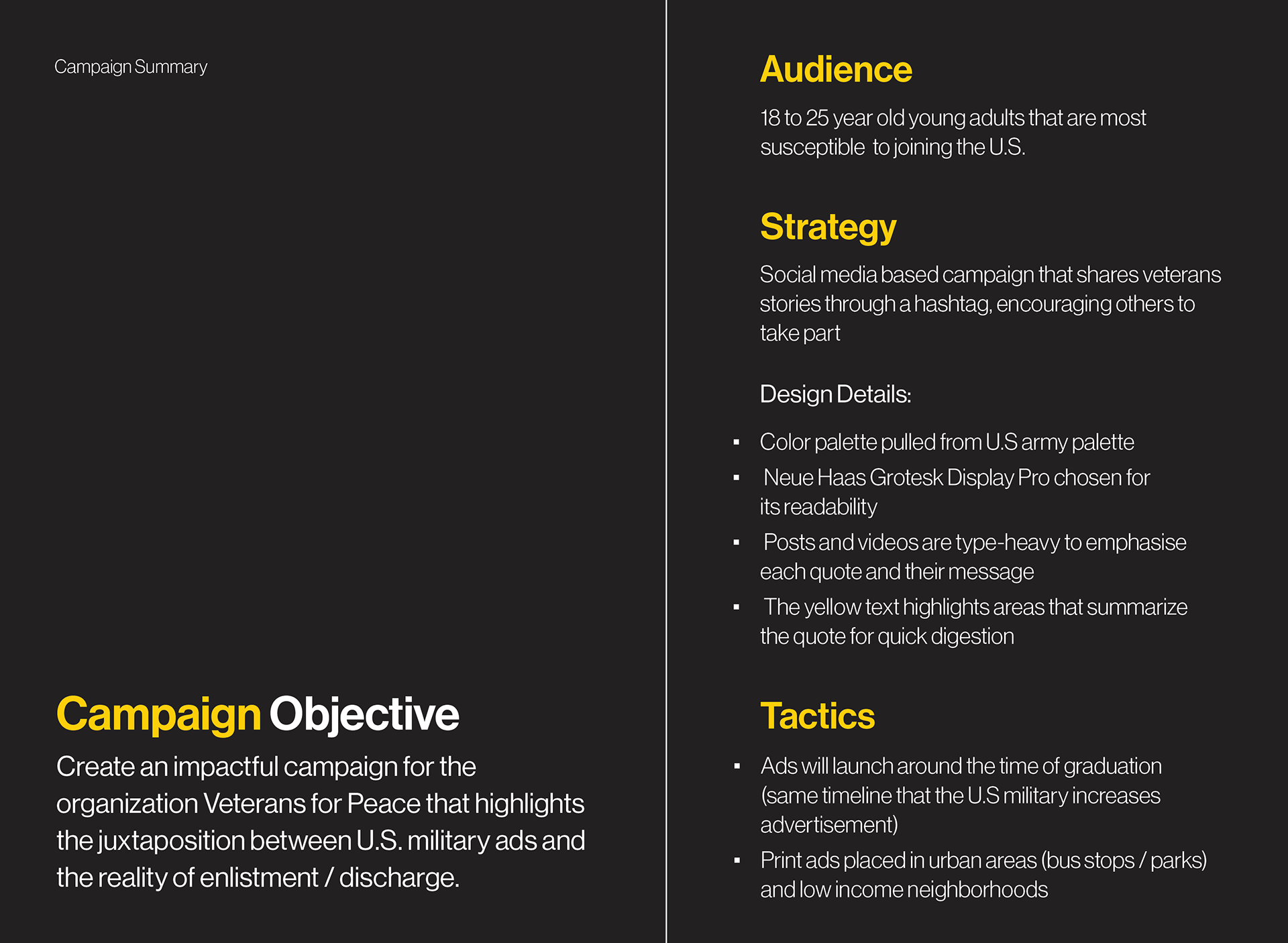
The main objective with this project was to create an impactful ad campaign for the Ad Council and/or an organization that drives action on a critical social issue.
My organization of choice was Veterans for Peace as they stand to serve the cause of world peace through nonviolence and democratic means. I found this mission the most compelling due to current politics and events.
Research & Goal
When doing research I found that there was a stark difference in how the U.S. military advertises themselves vs. the way veterans share their experiences. I found that the Army, Navy, and Marines carry intense heroic messaging, nationalism, and hypermasculinity. This juxtaposition inspired me to shift gears a bit. I started wanting my campaign to dismantle the idealized and unrealistic ads by the U.S. military while still focusing on U.S. veterans experiences.
Audience
As my research furthered I started focusing on who my target audience would be. Taking notice of the U.S. military writing style, it wasn’t hard to figure out they usually target societies most vulnerable, ranging from low income neighborhoods to those who have been affected by natural disasters.
I decided my primary audience would be 18 to 25 year olds as this age range tends to go through many transitions into adulthood, being the most susceptible to joining the U.S. military. I wanted the campaign to bridge a better understanding for this age range of what is really being asked of them when enlisting.
My secondary audience, however, was much larger, ranging from 18 to 40 year olds. This is because I wanted my campaign to also move people to vote for better and ideally build support systems for those who have served.
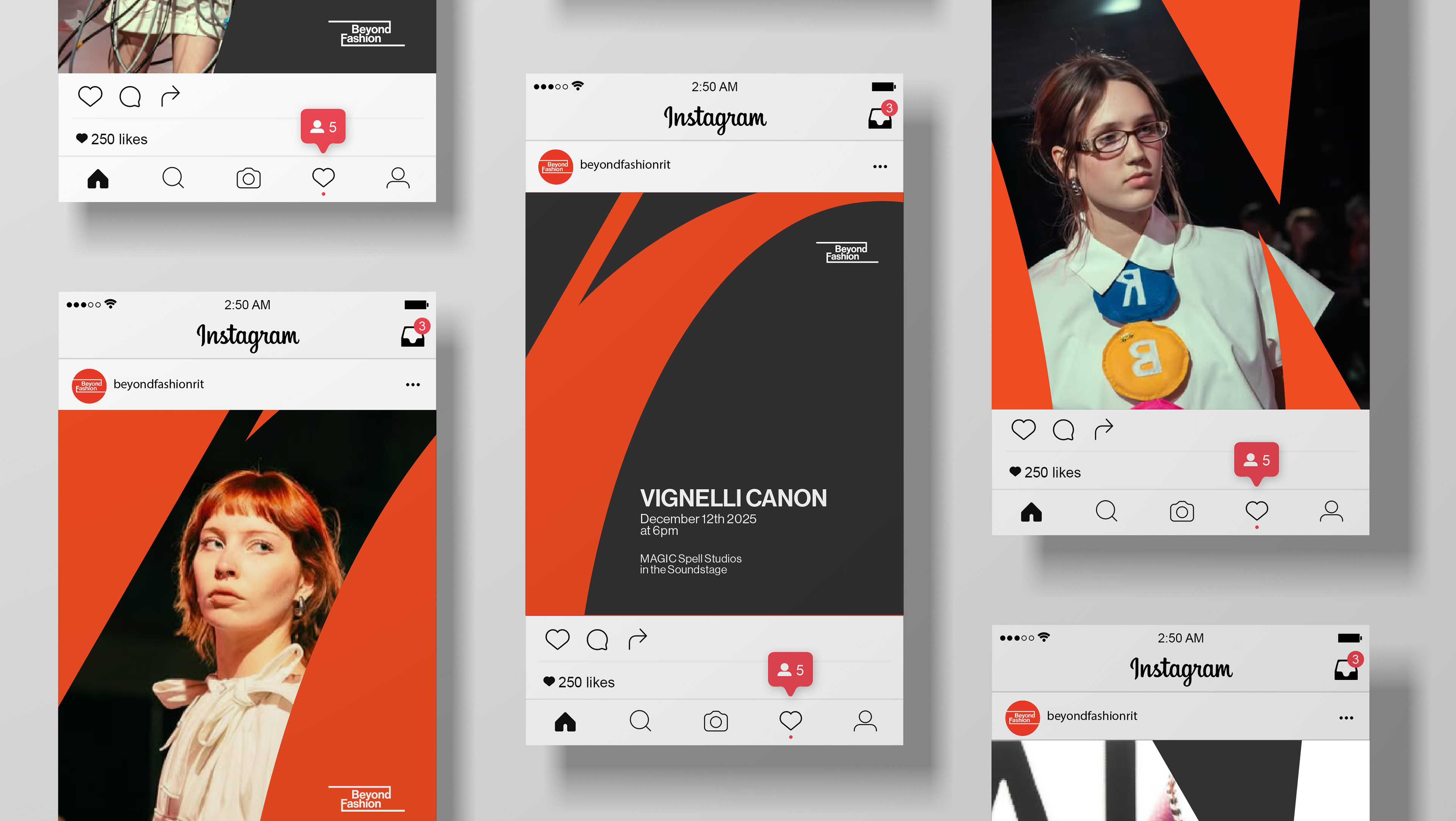
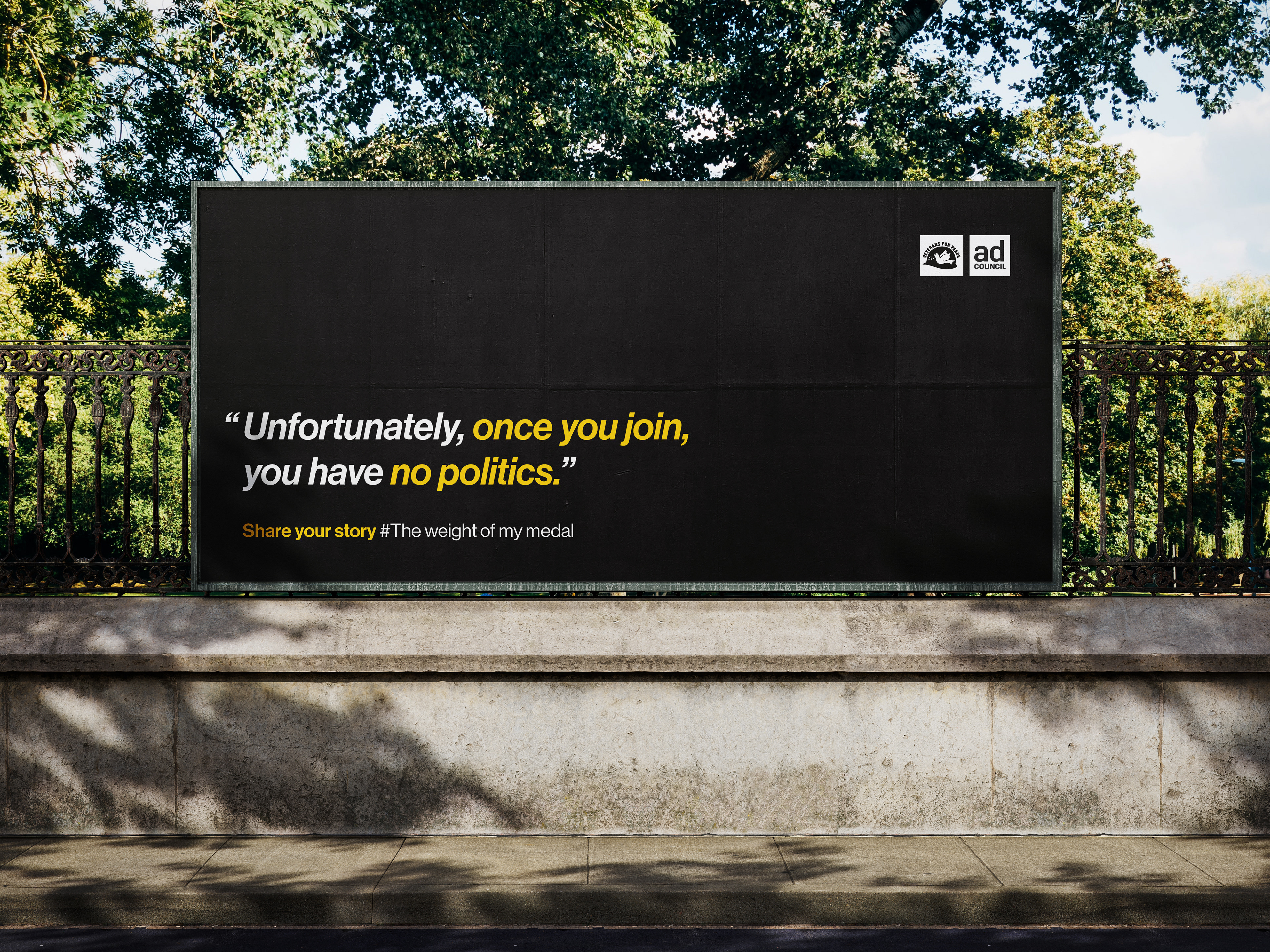
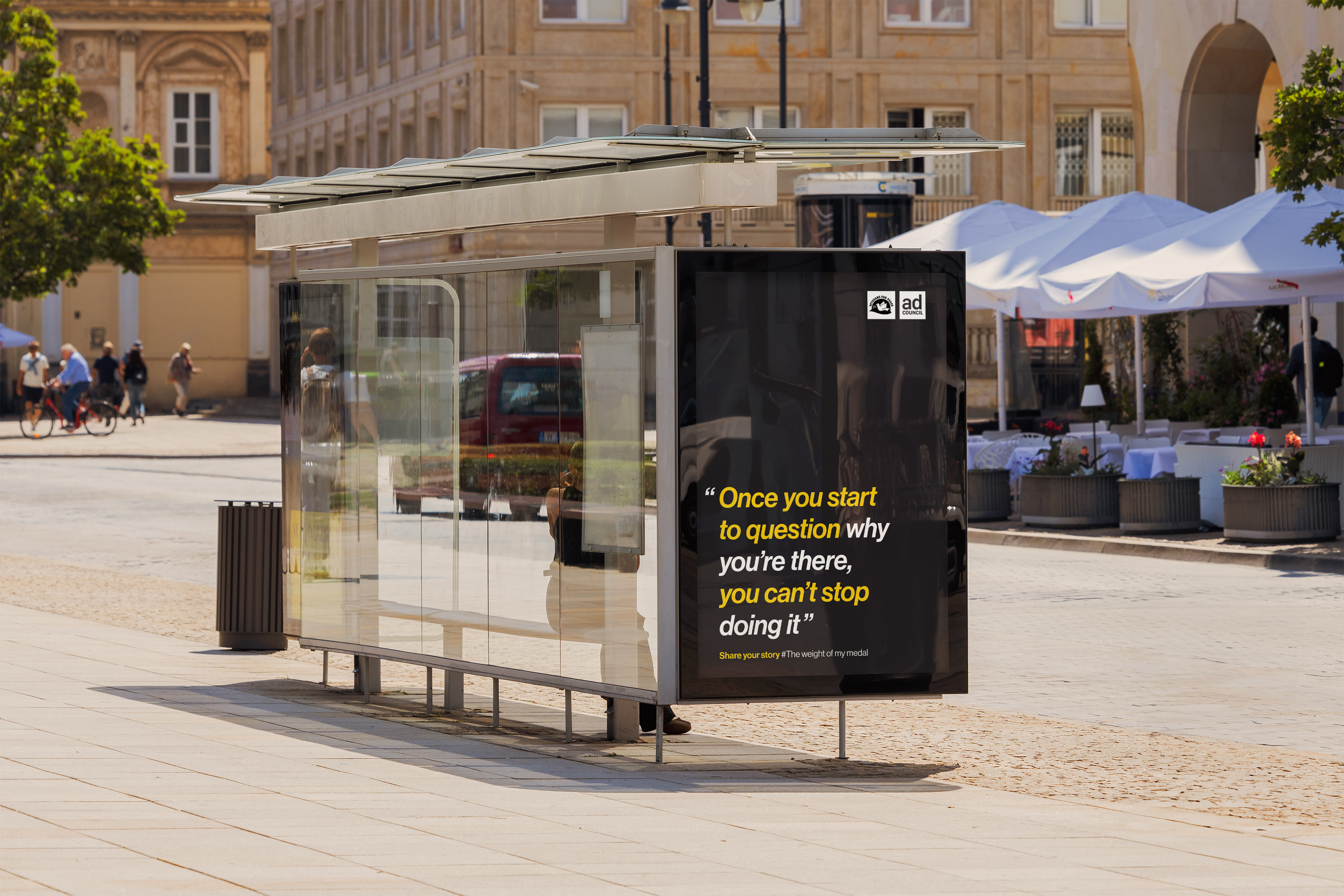
Having my audience figured out gave me leeway to consider locations of where these ads would live. I did want this project to be social media based, but I also wanted it to reach my secondary audience. Thinking this over I remembered seeing military ads posted on bus stops, behind public buses, and billboards. Since my goal is to respond/dismantle the military’s narrative with reality, I decided I would use similar locations. Specifically with the print ads being placed in urban areas and low-income neighborhoods to reach the intended audiences.
Process Breakdown
Through my brainstorming and iterations I noticed that writing a story based on my research fell on the shallow end of the pool. Luckily, around this time I was having check-ins with my professor. We discussed my topic, my findings, and struggles. During this conversation, my professor shared an excerpt, no longer than a few lines, from her father’s war journal. Those lines immediately shifted my mood and impacted me for the rest of the day. It kept popping up in my head, especially when thinking about this project, and ultimately was the deciding factor on how I would go about my solution.
I began to truly understand that this topic is something I can’t just write about. That no matter how I wrote a script or drew a story board it would keep falling short. I wanted to impact my audience the same way I was, by just a few lines. And that was the exact solution. Finding a way to share those stories and lines.
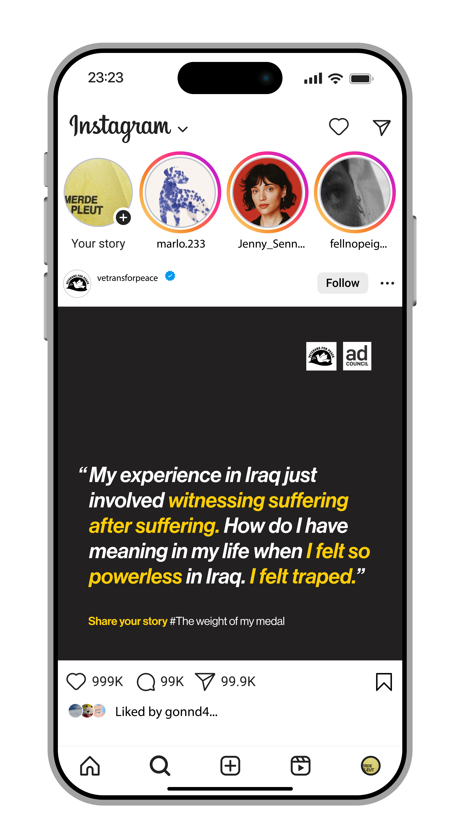
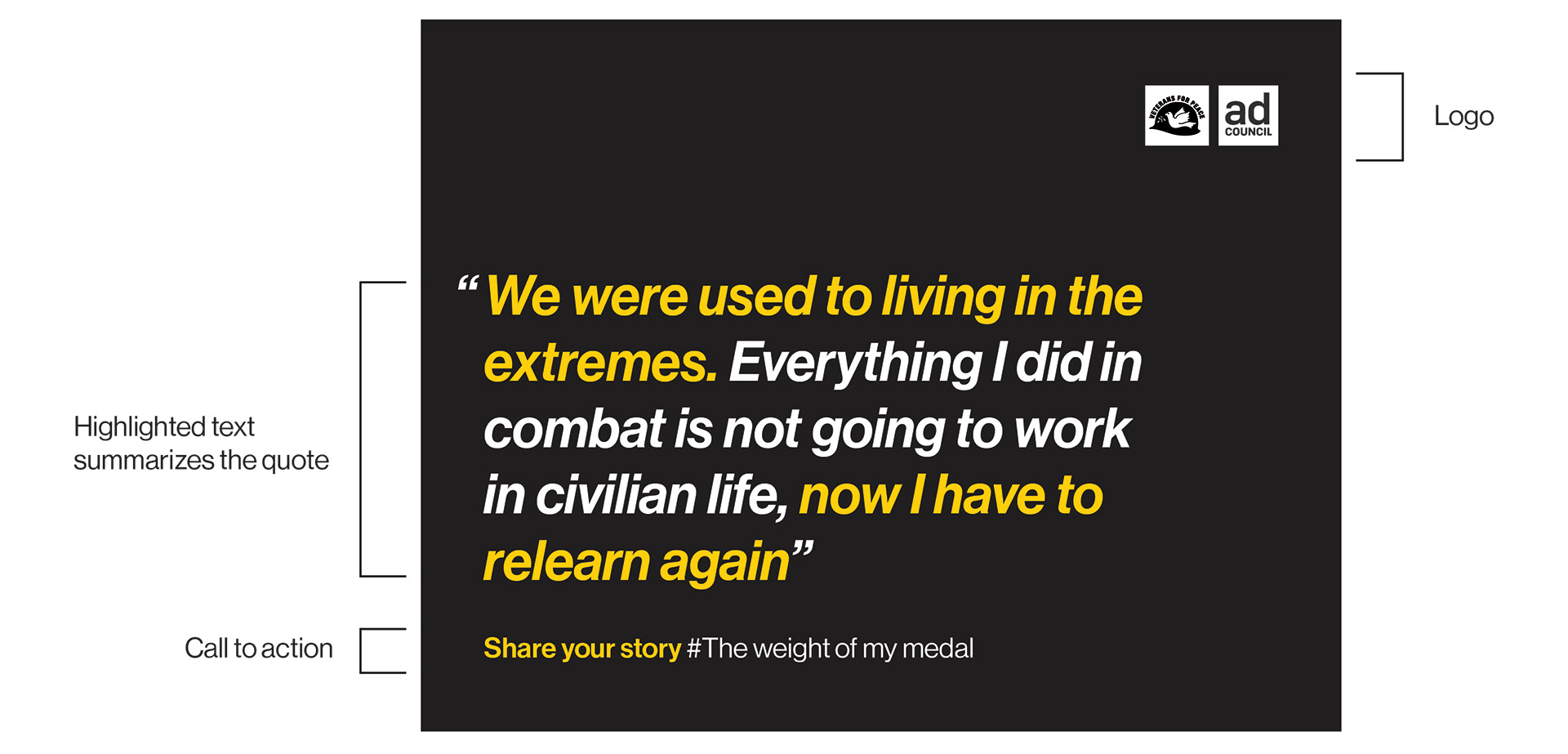
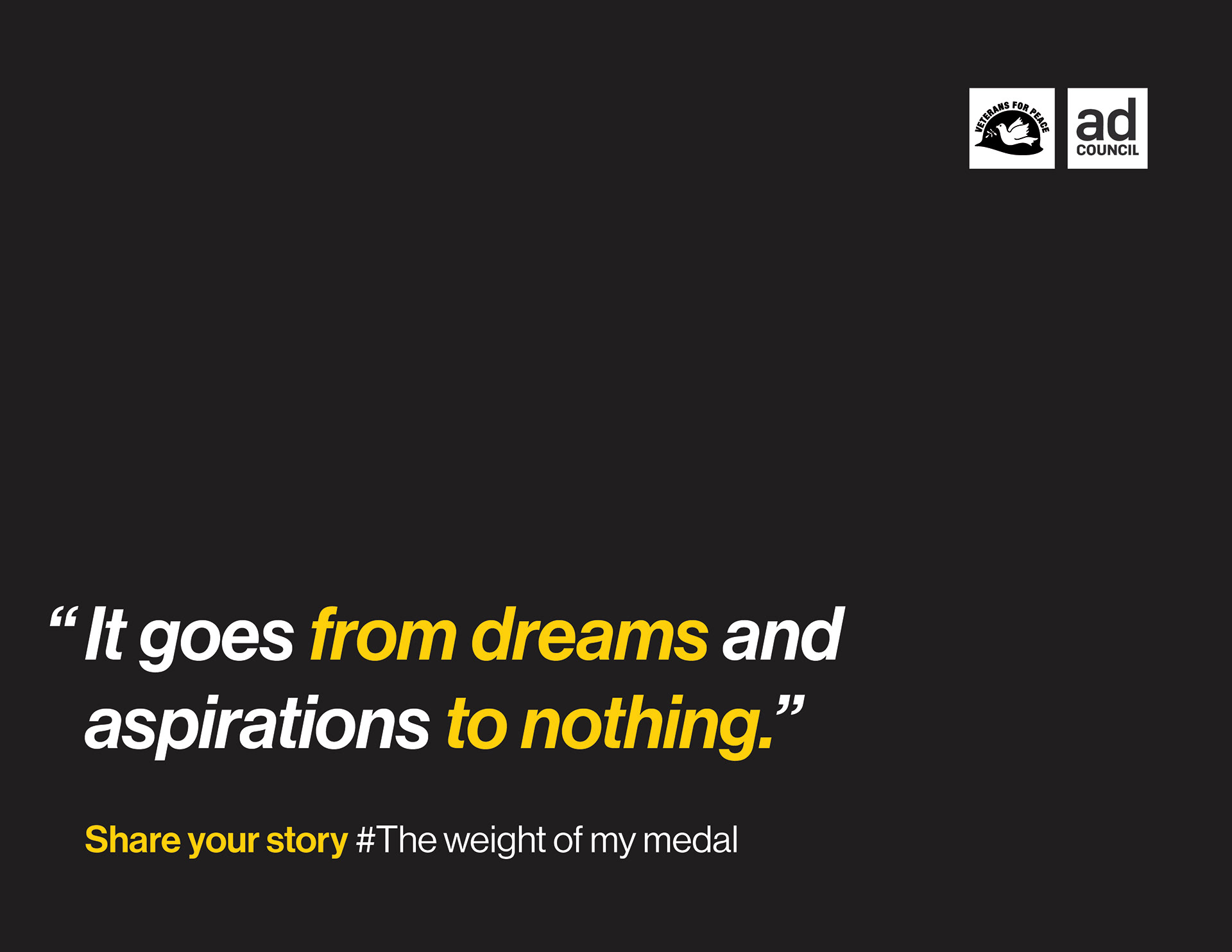
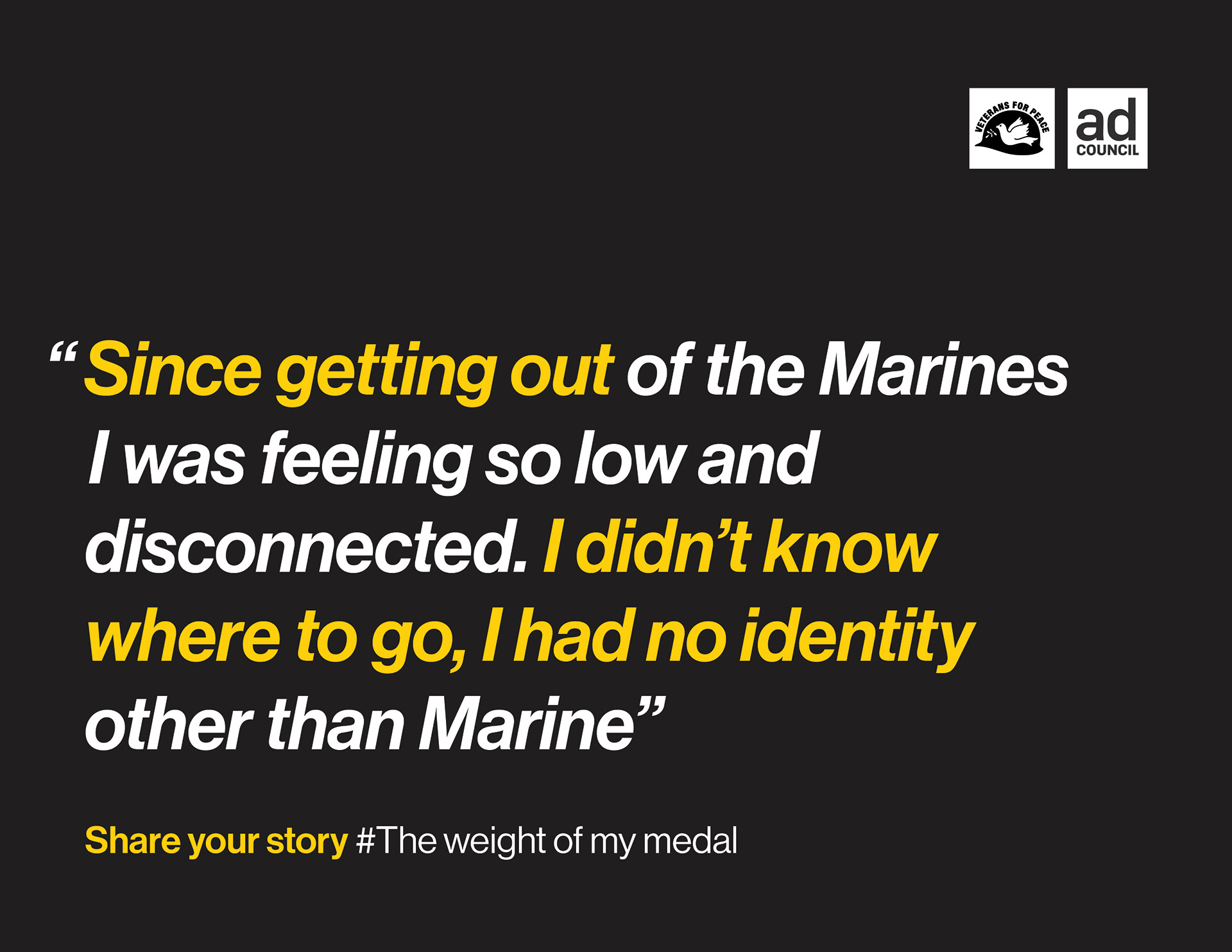
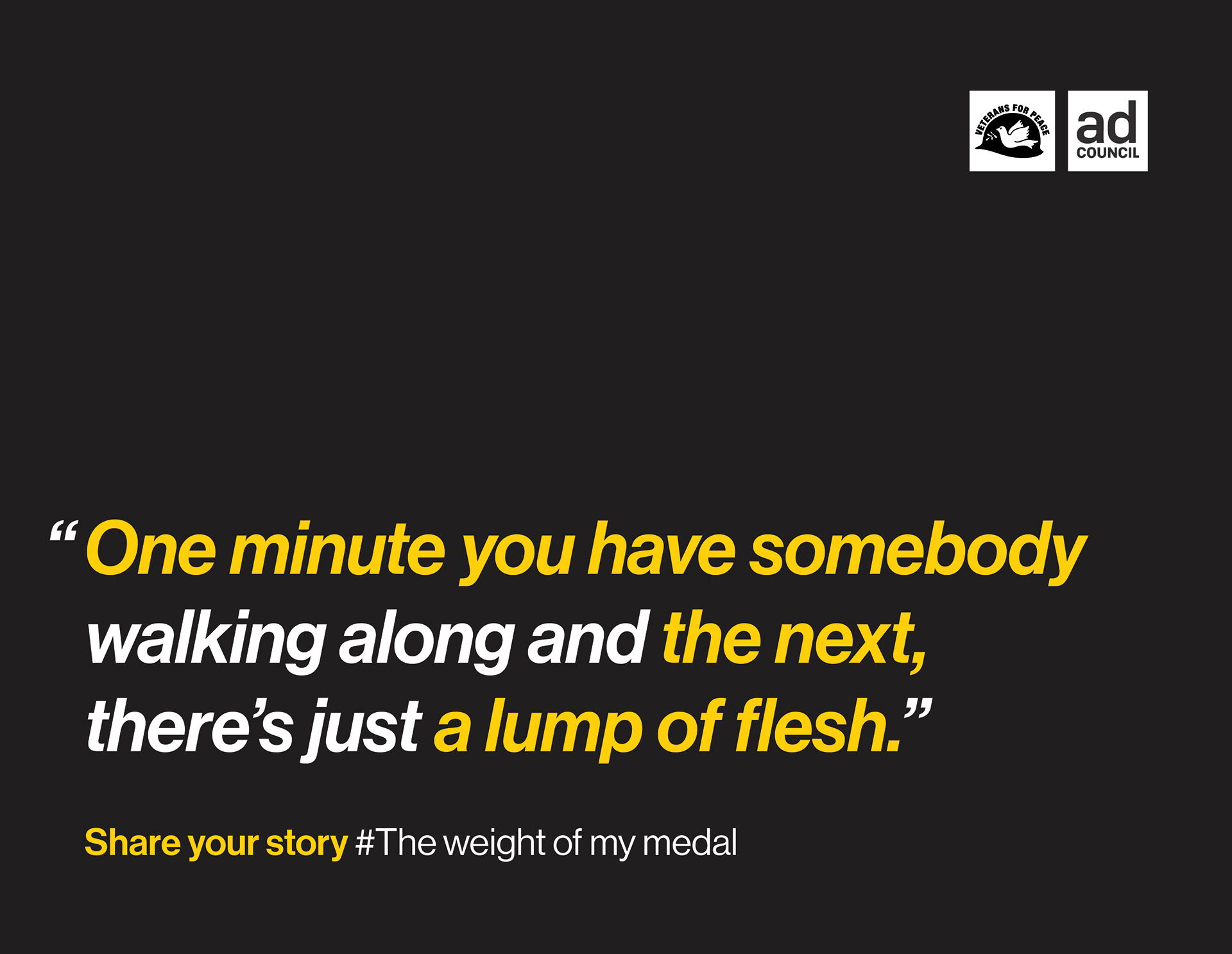
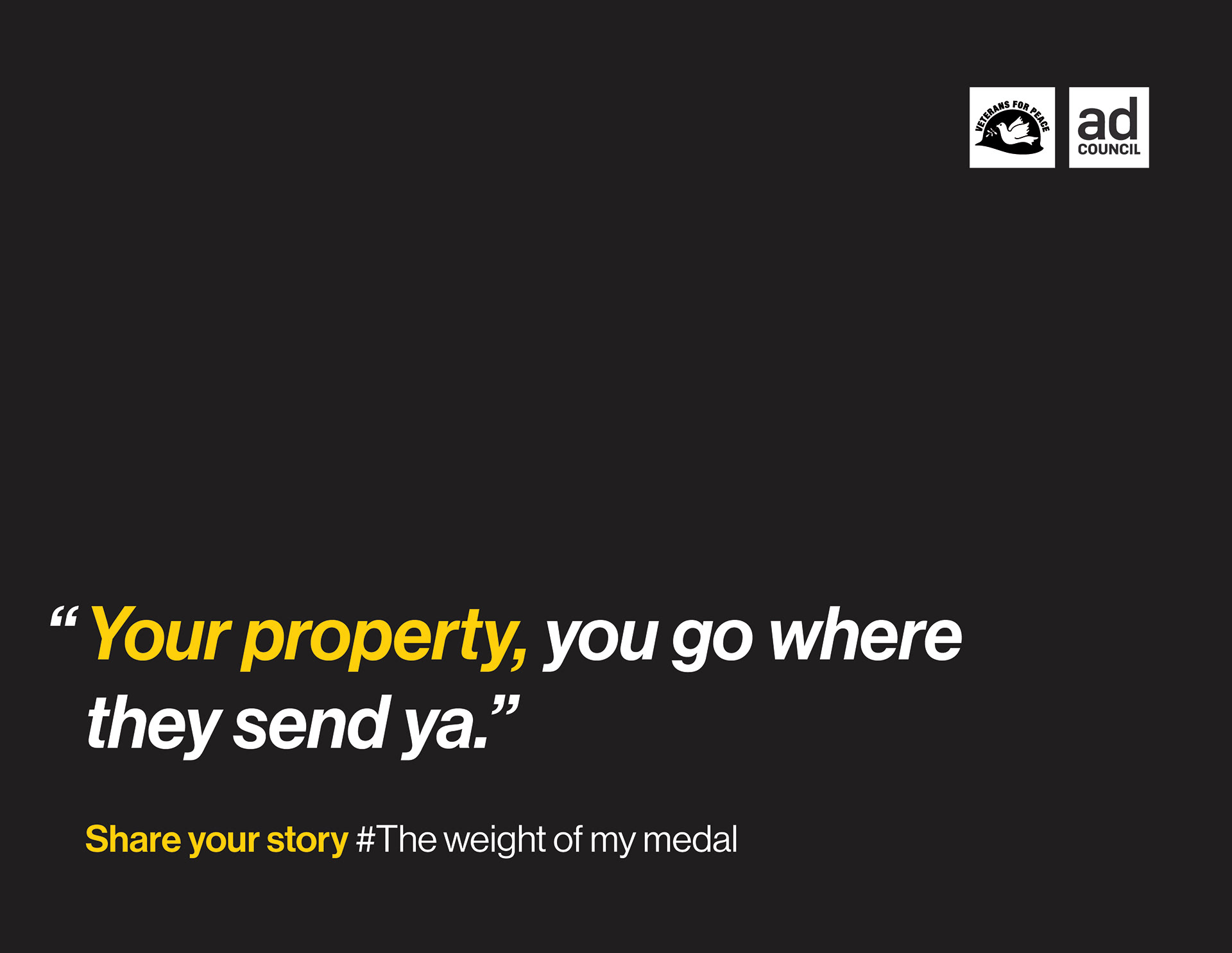
I began searching for interviews of veterans talking about their experiences. This was no challenge as there were thousands of articles, interviews, videos, and tweets. I listened and read through as much as I could and pulled out lines that reminded me of the feeling I felt after my check-in with my professor. As I was going through all this information I focused on videos, and listened intently to the voices of the veterans. As much as their stories held weight, so did their voices. And in that moment I decided I wanted my campaign to carry veteran's voices as much as their words, resulting in a video ad where viewers are pushed into following along with the narrator as each spoken word appears on screen.
Since this campaign involved being social media based and sharing veteran stories, it only felt fitting to have a hashtag prompt others to share their experiences. And much like the quotes I wanted the hashtag to hold the same level of intention and messaging. #The weight of my medal was inspired by both my initial understanding of the tone each veteran carried when sharing experiences, and a protest held in 2012 in front of the NATO summit. During this protest soldiers threw their medals away on stage towards NATO after sharing a small speech. Symbolizing that they would no longer carry the weight of the U.S. military on their bodies.
Overview
Overall I am very proud and happy with my solution for this project. I made sure to be very intentional with each one of my decisions, both from a design standpoint and advocate. And although there are many areas I can improve on and push further, I am still satisfied with everything.